admin
admin
As of April 21, 2025, the global economy is experiencing significant turbulence due to a resurgence in protectionist trade policies, particularly aggressive tariffs imposed by the United States under President Donald Trump. These measures have disrupted international trade flows, strained diplomatic relations, and led to a marked slowdown in economic growth worldwide.
Key Developments
1. U.S. Tariff Escalation and Global Impact
- The Trump administration has implemented sweeping tariffs, including a 10% global tariff and duties up to 50% on imports from 57 countries. Specifically, the average tariff on Chinese goods has surged to 54%, prompting retaliatory measures from China and other affected nations. CFA Institute Blog
- These actions have effectively decoupled the U.S. and Chinese economies, with the World Trade Organization (WTO) projecting an 81% decline in bilateral merchandise trade this year. The Guardian
2. Economic Forecasts and Market Reactions
- The WTO has revised its 2025 global trade growth forecast from a 3.0% increase to a 0.2% decline, citing the resurgence of U.S. tariffs and broader economic spillovers as key factors. Reuters
- The Penn Wharton Budget Model estimates that these tariffs will reduce the U.S. long-run GDP by about 6% and wages by 5%, with a middle-income household facing a $22,000 lifetime loss. Penn Wharton Budget Model
- A Reuters poll indicates a 45% chance of a U.S. recession in 2025 due to these tariff-induced economic pressures. Reuters
3. Global Responses and Policy Measures
- At the IMF and World Bank Spring Meetings in Washington, leaders expressed deep concerns over the lack of coordinated action to address the economic fallout. Unlike the unified response during the 2008 financial crisis, current discussions are marked by disunity, with countries pursuing individual strategies to mitigate the impact. The Guardia
- China has responded with retaliatory tariffs of 34% on U.S. goods and has implemented export restrictions on critical materials like rare earths. The European Union is preparing its own countermeasures, while countries like Canada and Mexico have secured partial exemptions under the USMCA agreement.
4. Sectoral and Regional Impacts
- The Asia-Pacific region is experiencing dampened growth prospects, though not substantial damage, due to the tariff war. Lower energy prices and reduced import costs from China are providing some relief, allowing central banks in the region room to ease monetary policy to support growth. ICG
- In the United States, the labor market is under pressure, with projections indicating a rise in the unemployment rate by 0.6 percentage points by the end of 2025 and a reduction in payroll employment by 770,000 jobs. The Budget Lab at Yale
Outlook
The current trajectory suggests a challenging economic environment ahead. The shift from a rules-based to a deals-based global trading system is introducing significant uncertainty, making reliable forecasting difficult. The lack of a cohesive international response further exacerbates the situation, leaving economies to navigate the fallout individually.Reuters
As the situation evolves, stakeholders are advised to monitor policy developments closely and consider strategies to mitigate potential risks associated with the ongoing trade tensions.
——————————————————————————————–
🛑 Overall Sentiment
Global stock markets are under broad pressure due to renewed U.S. protectionist tariffs, sparking fears of:
- Slower global growth
- Trade war escalation
- Lower corporate earnings, especially for multinationals
🔍 Major Index Performance
- S&P 500: Down ~2.3% over the past week — tech and industrials hit hardest.
- Dow Jones: Dropped ~1.9%, reflecting weakness in global exporters (Boeing, Caterpillar).
- NASDAQ: Slid ~3.2% — high-growth tech stocks are sensitive to supply chain risks.
- Shanghai Composite: Down ~1.6% — Chinese companies facing export headwinds.
- EURO STOXX 50: Fell ~1.8% — European firms hit by decreased U.S. demand and retaliatory tariffs.
📉 Sector-Level Impact
| Sector | Impact | Notes |
|---|---|---|
| Technology | 🔻 Negative | Higher production costs (esp. semiconductors, electronics); supply chain disruptions |
| Industrials | 🔻 Negative | Heavily reliant on global trade; declining export volumes |
| Consumer Goods | 🔻 Mixed | U.S. tariffs raise prices on imports; domestic producers gain slightly |
| Energy | ⚖️ Neutral to Slight Positive | Lower demand weighs, but lower costs for Asian importers help margins |
| Agriculture | 🔻 Negative | U.S. farmers hit by China’s retaliatory tariffs |
| Defense | 🔼 Positive | Strategic tensions and trade decoupling driving higher defense spending |
📈 Company Examples
- Apple (AAPL): Dropped 4.5% this week — exposure to Chinese manufacturing and global demand slump.
- Tesla (TSLA): Down 5.2% — tariffs on EV components and rare earths impact costs.
- Boeing (BA): Slid 3.1% — affected by lower aircraft orders abroad.
- Lockheed Martin (LMT): Up 1.7% — seen as a safe haven in geopolitical turmoil.
🧠 Investor Sentiment
- Volatility is rising (VIX +12% this week)
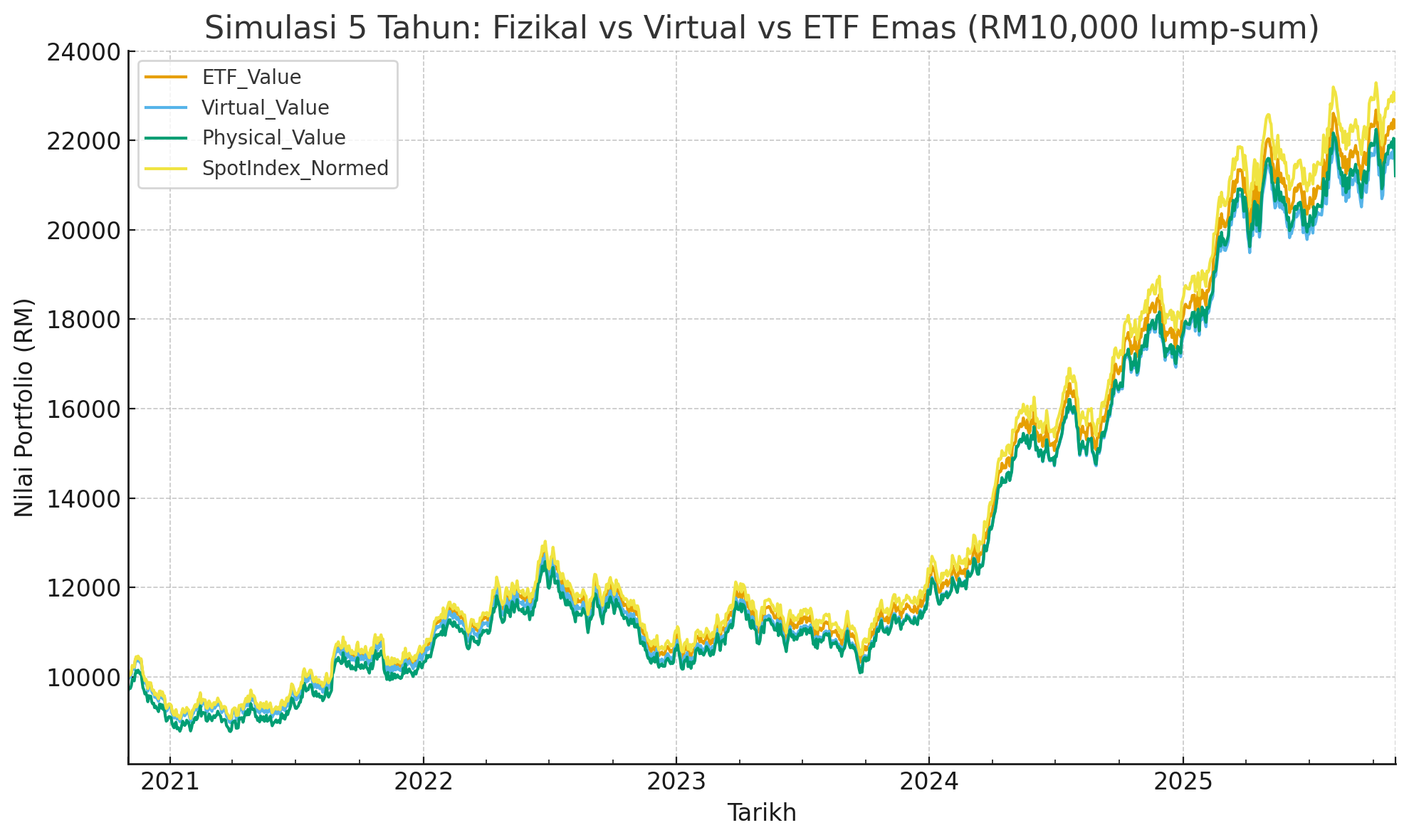
- Flight to safe havens: Gold, Treasury bonds, and the U.S. dollar are seeing inflows.
- Institutional investors are rebalancing portfolios away from cyclical and export-heavy sectors.