admin
admin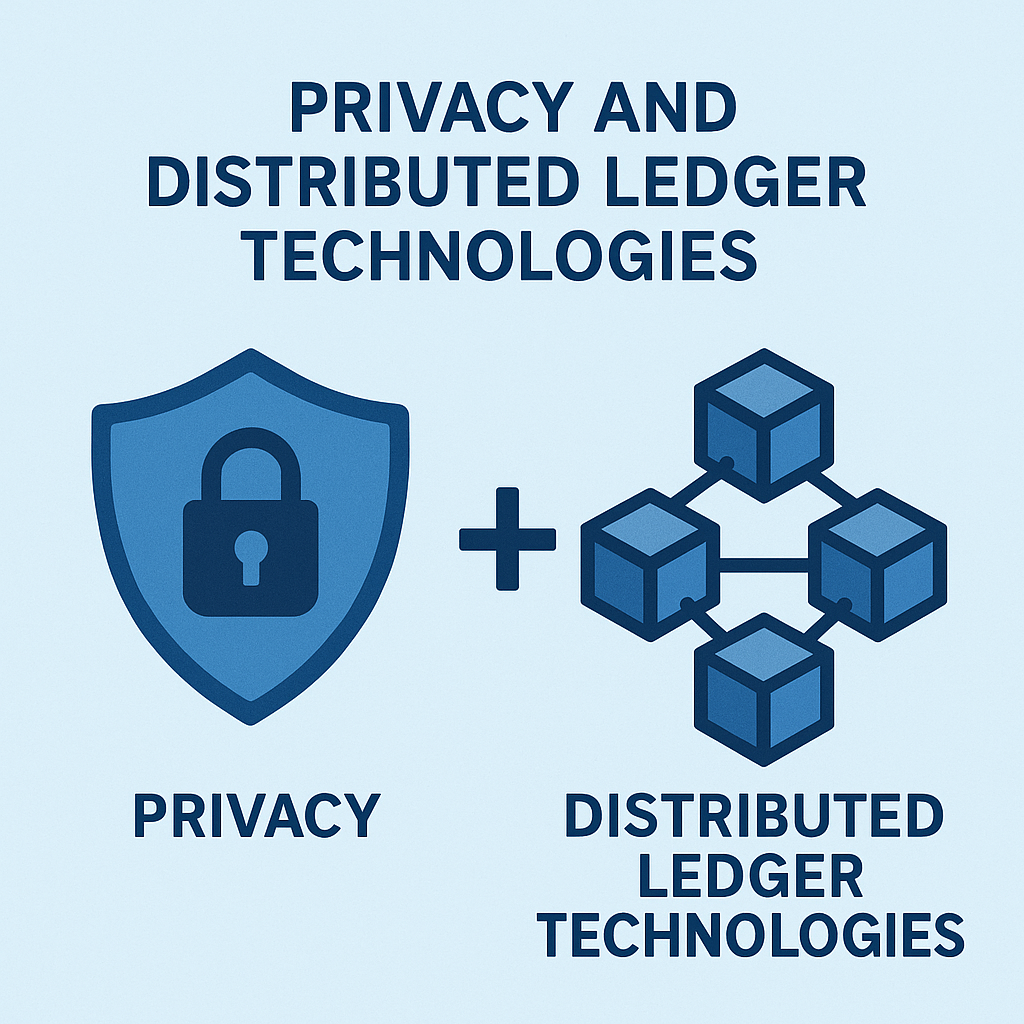
🅰️ What Is Distributed Ledger Technology (DLT)?
A Distributed Ledger is a decentralized database spread across multiple participants (nodes) in a network. Every node maintains a copy of the ledger, and updates are made through consensus.
🔹 Key Types:
- Blockchain: The most famous DLT (used by Bitcoin, Ethereum).
- DAG (Directed Acyclic Graph): Used by IOTA and others for faster, feeless transactions.
🅱️ Why Privacy Matters in DLT?
In public DLTs like Bitcoin, transactions are transparent — everyone can see the sender, receiver, and amount (though pseudonymous). This becomes a problem for enterprises, governments, and privacy-conscious users.
Use cases that need confidentiality:
- Medical records
- Bank transactions
- Government or enterprise supply chains
🅲️ Privacy-Preserving Techniques in DLT
Here’s a breakdown of popular methods to preserve privacy in DLT systems:
✅ 1. Zero-Knowledge Proofs (ZKPs)
Let one party prove to another that they know a value (like a password) without revealing the value itself.
Used in:
- Zcash (zk-SNARKs)
- Polygon zkEVM
- Aztec Protocol
✅ 2. Ring Signatures
Used in Monero — mixes a user’s transaction with others’ to obscure sender identity.
✅ 3. Stealth Addresses
Each transaction generates a one-time-use address for privacy (also used in Monero).
✅ 4. Confidential Transactions
Hide the transaction amount while still allowing network verification (used in Elements, Bitcoin test networks).
✅ 5. MPC (Multi-Party Computation)
Multiple parties jointly compute a function over their inputs while keeping them private.
🅳️ What is PADL? (Private, Auditable, Distributed Ledger)
Recently, researchers proposed a system called PADL — it aims to balance privacy, auditability, and decentralization.
🔑 PADL Features:
- Private: Transactions are encrypted, only visible to involved parties.
- Auditable: Selective disclosure possible — regulators can audit with permission.
- Distributed: Operates like traditional DLTs with no single point of failure.
- Multi-Asset: Can support various assets (currencies, tokens, securities).
Think of it as a privacy-enhanced blockchain for real-world finance.
🅴 Real-World Applications
🏦 1. Banking & Finance
- Privacy-preserving payment systems
- Digital currencies (like CBDCs – Central Bank Digital Currencies)
- Confidential corporate transactions
📦 2. Supply Chain
- Share critical data between vendors without leaking pricing or identity
🏥 3. Healthcare
- Patients control who sees their records, while hospitals can verify authenticity
🅵 Technologies Enabling Privacy in DLTs
- zk-SNARKs / zk-STARKs: Cryptographic proofs without revealing data
- Homomorphic Encryption: Enables calculations on encrypted data
- Bulletproofs: Shorter ZKP for Confidential Transactions
- Trusted Execution Environments (TEEs): Hardware-based security (e.g., Intel SGX)
The Future of Privacy and DLT
🌐 Trends:
- Governments working on privacy-friendly CBDCs
- Enterprises adopting private blockchains with audit trails
- New L2s (Layer 2s) on Ethereum focusing on privacy + scalability
💡 Challenges:
- High computation cost for ZKPs
- Regulatory concerns (e.g., anti-money laundering)
- UX hurdles — privacy often complicates user experience
🚀 Summary
| Topic | Summary |
|---|---|
| DLT | A decentralized ledger system |
| Privacy in DLT | Needed to protect data and business confidentiality |
| PADL | Framework combining privacy, auditability, and decentralization |
| Techniques | ZKPs, Ring Signatures, Confidential Txns, etc. |
| Use Cases | Finance, healthcare, supply chains |
| Challenges | Cost, regulation, complexity |
🏦 How Privacy + DLT Are Related to Banks
🔐 1. Privacy in Transactions
Banks handle sensitive financial data:
- Customer transactions
- Interbank transfers
- Loan details
- Wealth management portfolios
🔸 Banks must protect this data, especially with increasing privacy laws (e.g., GDPR, HIPAA). Distributed ledger systems like PADL allow encrypted or private transactions while still being verifiable — essential for:
- Regulatory compliance (e.g., for auditors)
- Client confidentiality (e.g., VIP or corporate clients)
🧾 2. Auditable and Compliant Ledgers
Banks need systems that are:
- Immutable (no backdating or tampering)
- Auditable (for internal and external regulators)
- Private (data not publicly viewable)
🔹 A PADL-like system enables:
- Real-time regulatory audit access with selective disclosure
- Compliance with AML/KYC rules without leaking customer data
- Internal risk reviews without breaching confidentiality
🌐 3. Cross-Border Settlements & Trade
In cross-border finance:
- Swift is currently dominant
- High fees, slow settlement times
- Transparency concerns
🔸 Banks are now exploring DLT-based cross-border platforms that:
- Offer privacy-preserving real-time settlement
- Reduce need for intermediaries
- Keep records tamper-proof and auditable
Examples:
- JPMorgan’s JPM Coin
- HSBC’s FX Everywhere
- Russia’s “China Track” netting system (DLT-based)
🪙 4. Central Bank Digital Currencies (CBDCs)
Many central banks are designing CBDCs (like digital dollars, rupees, euros) on DLT, often with:
- ZKPs or confidential transactions to protect user identity
- Traceability for crime prevention
- Control over interest rates or money supply
Banks will be the intermediaries between central banks and consumers in these systems.
🤖 5. AI + Private DLT for Smart Banking
Banks are integrating AI and smart contracts on private DLTs for:
- Automated compliance
- Personalized investment management
- Smart lending decisions
These systems can run securely in privacy-preserving environments (e.g., TEEs + ZKPs), protecting both the customer and the bank.